
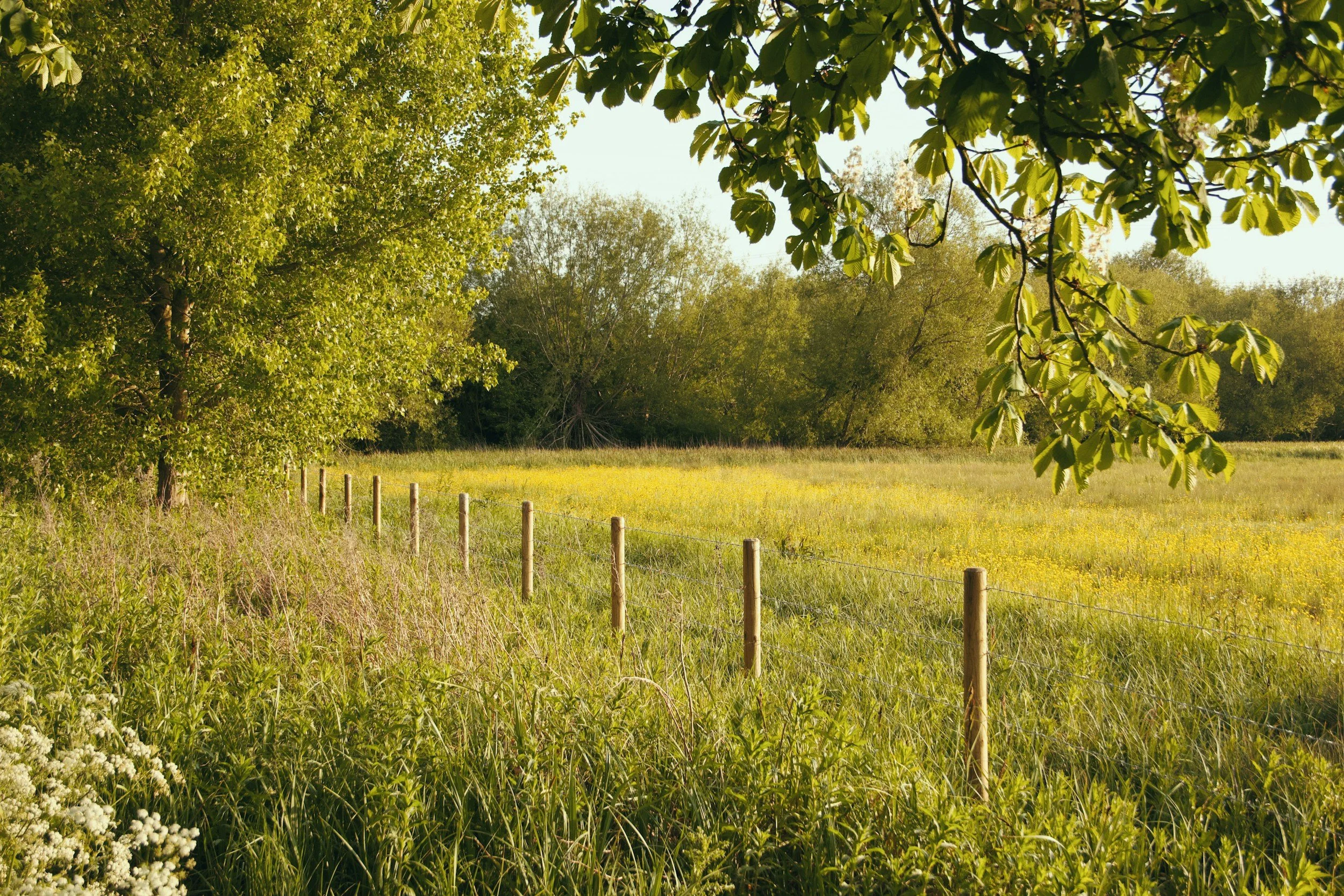
We graze animals to regenerate the land.
Our Mission
Since 2008, our mission at Pittsburgher Highland Farms has been to raise healthy 100% grass-fed Highland cattle to regenerate our farmland. We’ve now expanded to include Katahdin sheep, laying hens, and pastured pigs in the rotation. We sell our meat to our community in the greater Pittsburgh area to offer our neighbors a healthy alternative to conventional agriculture. We are excited to be expanding further as an affordable event space and tiny house rental for folks looking to directly support our mission!
We acknowledge that Pittsburgh and the surrounding area are on the traditional lands of the diverse groups of Seneca, Lenape, and Monogahela peoples, who stewarded the land and its animals through traditional knowledge far before “sustainable agriculture” was coined.
How We’re Achieving It
Raising Highland cattle, Katahdin sheep, & pastured pigs
Highland cattle are the ideal animals for being raised on a grass-fed diet! Originally from northern Scotland, they are a hearty breed specifically selected to withstand cold, wet temperatures and sparse forage options. Although we make sure they always have access to top-quality forage, they are inclined to graze on things like weeds and brush other breeds might pass up, making them perfect ecosystem engineers in our hilly Western Pennsylvanian pastures. The breed is known for their gentle nature, ease with calving, and longevity. And of course — their unique looks. Our pastures are better off after years of them eating weeds and turning up the earth for native species to come back. We love our hearty Highlands! Read more about Highlands here in our blog post.
Katahdin sheep are much like the Highland cattle of the ovid world. Bred in northern Maine to withstand harsh winters and sparse forage (sound familiar?) the versatile breed can be raised for either milk or meat. They are hair sheep, so they do not produce wool, and do not have to be shorn every year, but they still stay warm through the chilly winters. They are even less picky than the cattle and have been a huge help on the farm in clearing out overgrown brush.
Our previous intern EJ started our pastured pork program a few seasons ago. Thanks EJ! We buy healthy hybrid piglets from our neighbors to raise on our diverse pastures where they finish on forage like nuts, legumes, roots, and grubs. They love being pigs out there in our osage line! Although they can’t join our ruminant herds, we utilize them to turn up the earth where we need to seed new species of grasses. The perennial grasses love the fertile soil the pigs expose with their natural rooting behaviors.
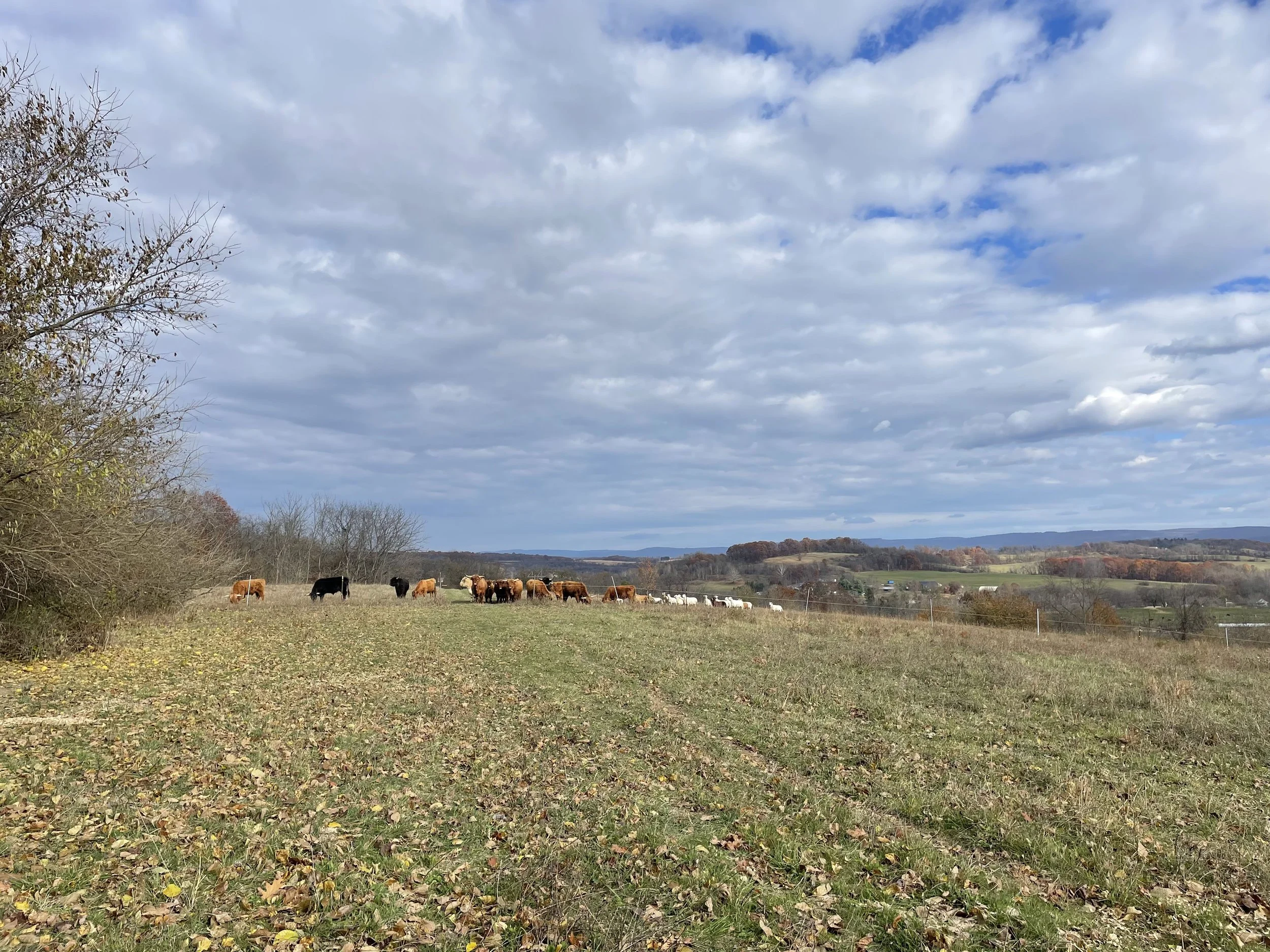
Our combined cattle/sheep “flerd” grazing together for the fall season.
Our cattle are raised 100% on pasture (no barns!) with their best interests in mind: we practice humane handling and breeding on the farm.
Learn more about the low-stress handling practices pioneered by Dr. Temple Grandin we have studied and utilize in our day-to-day operations.
Humane handling & breeding
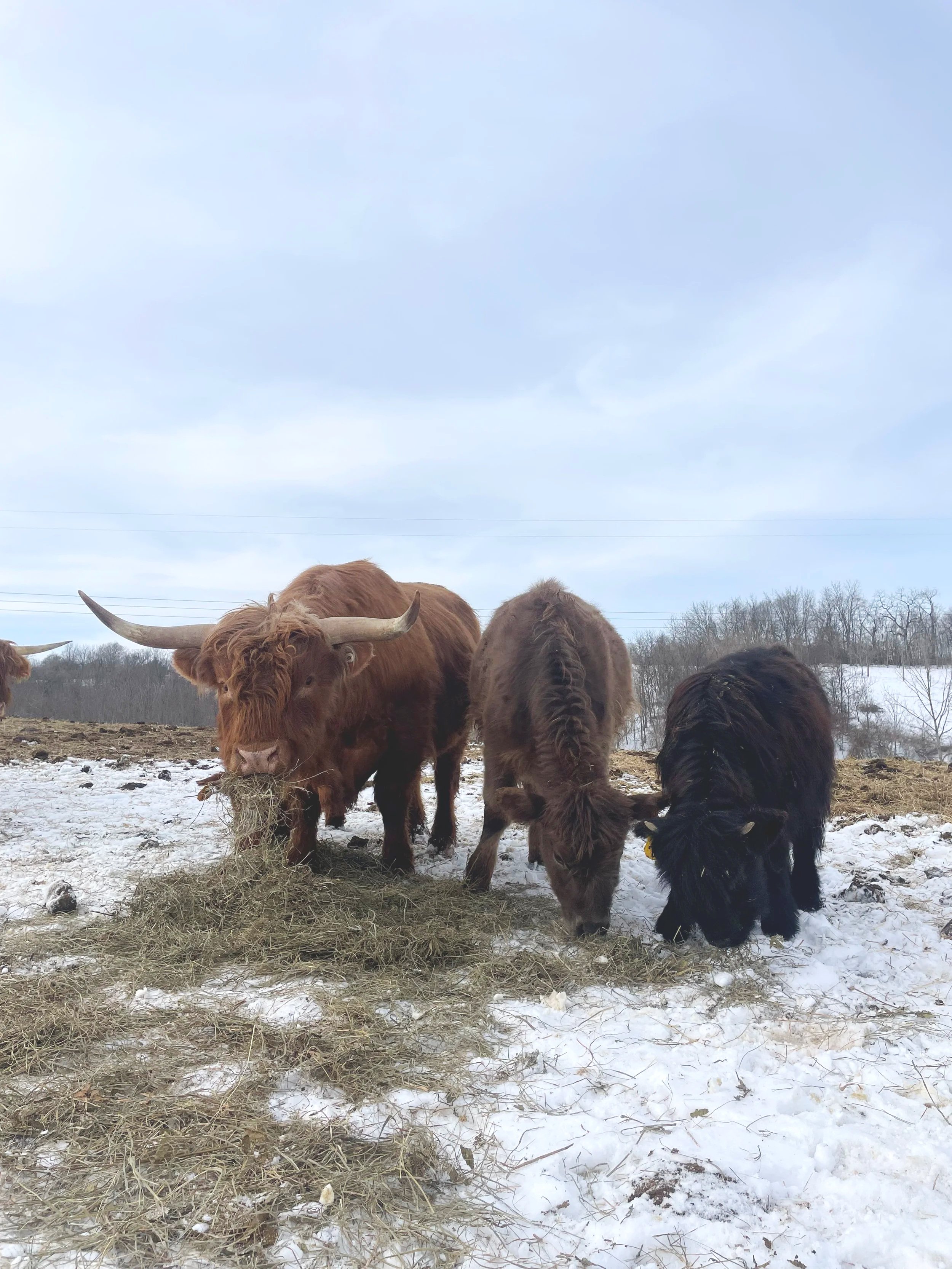
Our Highland bull Albert (left) with some of his calves!
Highland cattle are almost TOO good at what they do! Their hearty build is ideal for the rugged Scottish and Laurel Highlands, but not necessarily for growing quickly. While we started off our herd with purebred Highland cattle, we’ve mixed our stock with Devon cattle to help them mature faster and do better in our hot Pennsylvania summers. “Hybrid vigor” refers to the advantages in health and longevity hybrid animals have compared to their purebred counterparts. Also from the British Isles, Devon cattle are a hearty beef breed known for their docile temperament and quick maturation. We’ve found this cross to be ideal as producers who prioritize health and productivity. Our herd ranges from 100% purebred Highland to 50% Devon!
Crossing Highland & Devon cattle
Our animals are moved to new pasture multiple times per week during the grazing season. Each group grazes a new paddock while the last is left to recover. Depending on the time of year and amount of rainfall, pasture takes 30-45 days to regenerate. Rotational grazing slows soil erosion and has reduced greenhouse gas emissions compared to a conventional system.
It’s better for the animals too! Having ruminants on pasture rather than in a confined space is proven to result in less disease and fewer hoof issues, increasing quality of life for each animal (and reducing bills for the producer.)
Rotational grazing
Partnering with local organizations
Read more about our partners on this page!



Rigorous certifications
We’re proud members of the American Highland Cattle Association. We’re certified by their Quality Highland Beef program to ensure our meat is the healthiest and tastiest it can be for our neighbors who buy it. Our beef is nothing like the mass-produced steaks you buy at the grocery store — grass-fed beef has nearly twice the amount of Omega-3 fatty acids that can reduce unhealthy cholesterol!